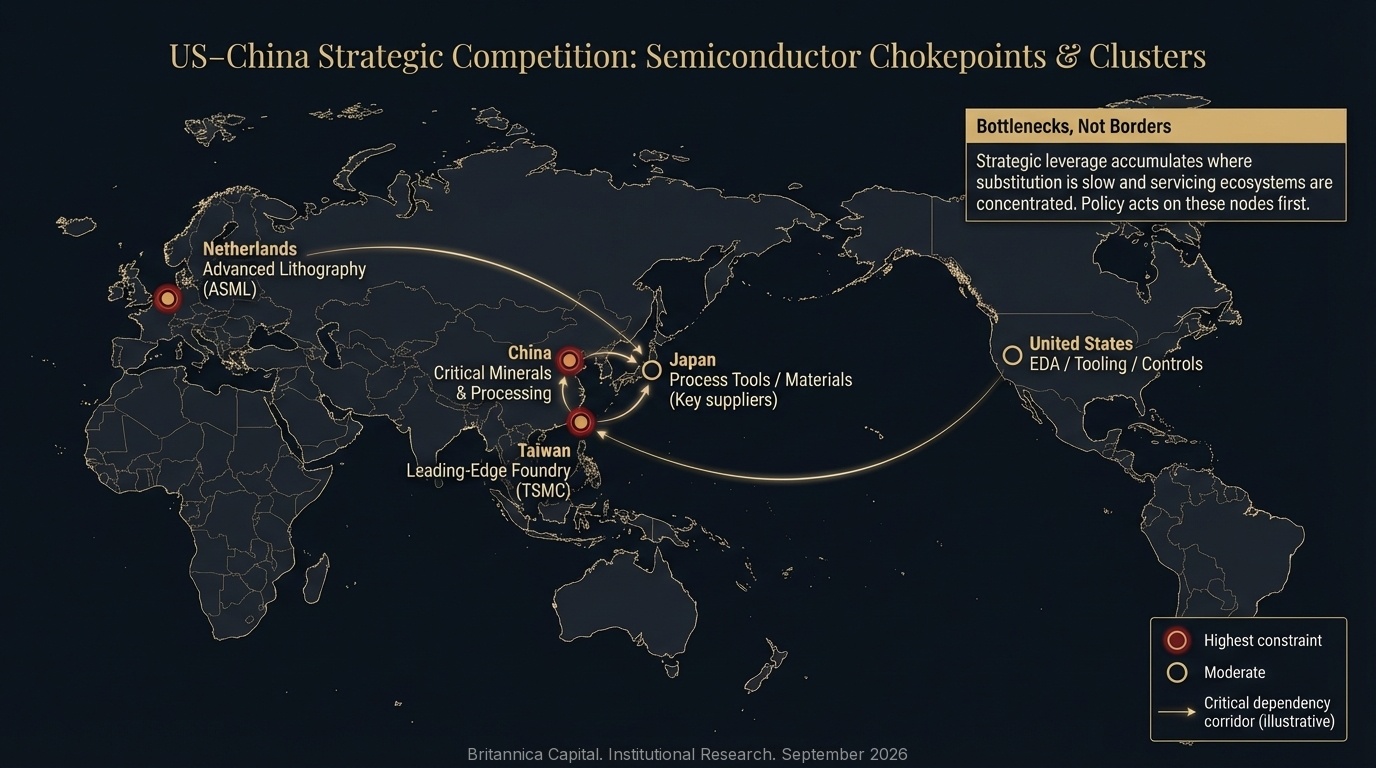
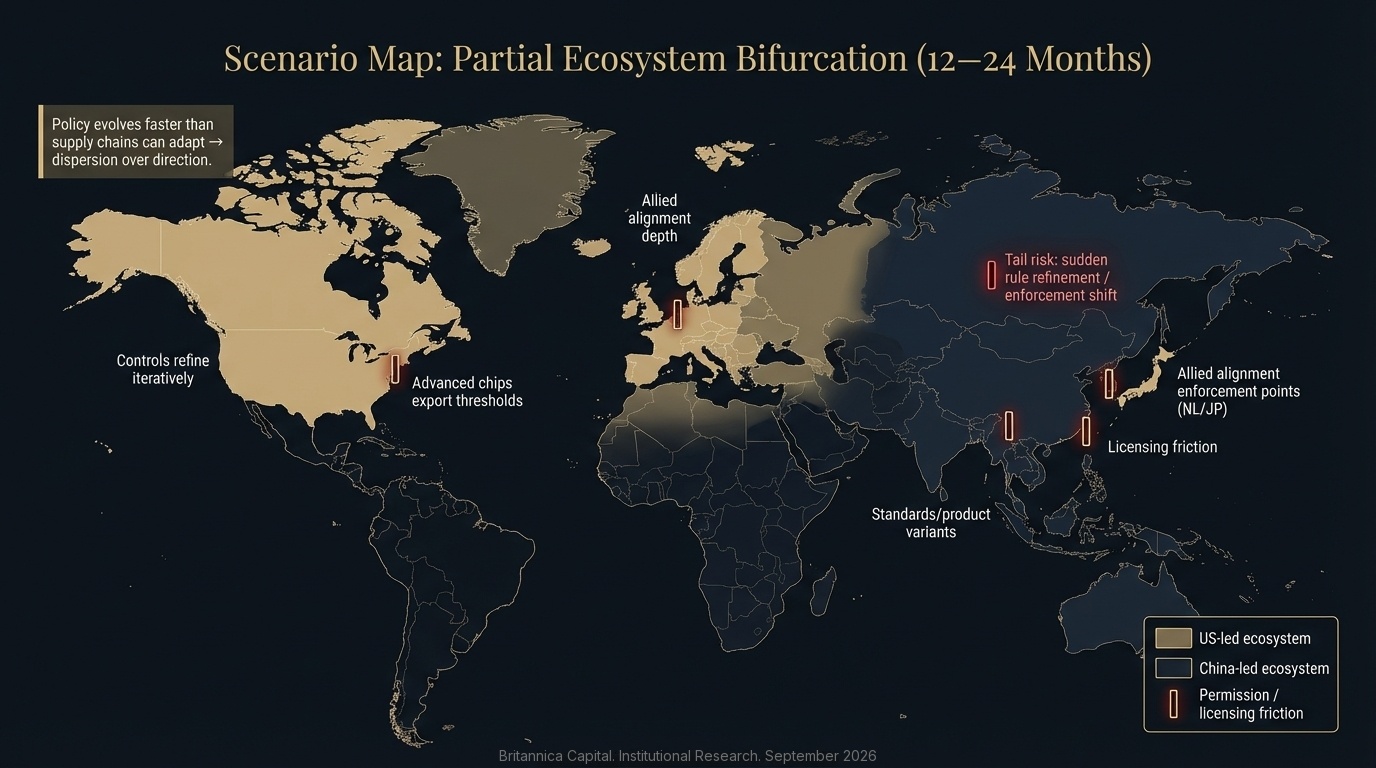
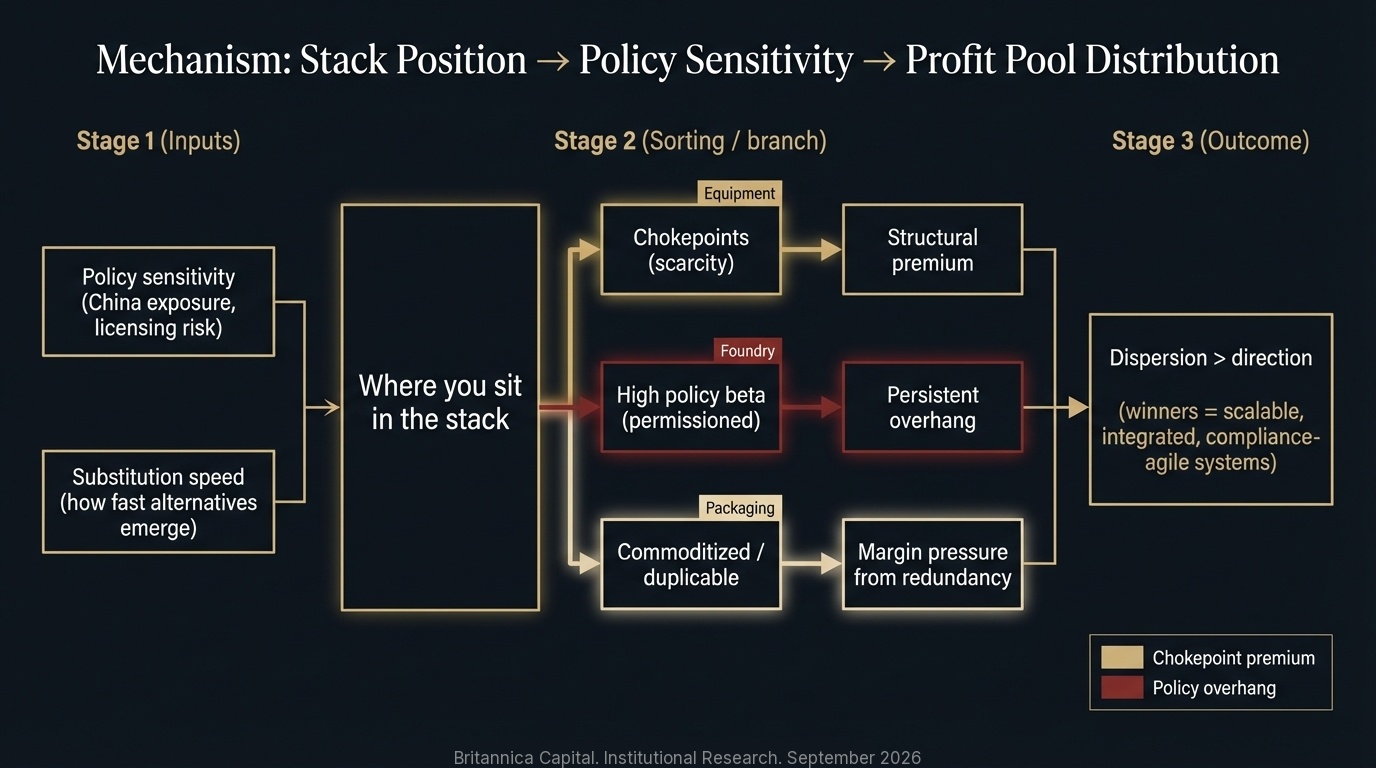
Geography is less about borders than bottlenecks. In this competition, strategic leverage accumulates where substitution is slowest: in advanced semiconductor manufacturing equipment, in the servicing ecosystems that keep those tools running, and increasingly in the upstream materials and processing capacity that feed them.
Allied chokepoints matter as much as American ones. Washington has pursued closer alignment with key equipment-producing allies, notably the Netherlands and Japan, which host critical advanced tooling capabilities. The Center for Strategic and International Studies has documented the reported January 2023 understanding and the subsequent Dutch and Japanese export-control measures that followed.
That alignment is now being tested from both directions. In June 2026 the Dutch government was reported to be lobbying Washington against further curbs on lithography sales to China as Congress debated the MATCH Act, which would codify equipment controls and give allies a fixed window to match them. In the same period, press reports citing Chinese customs data indicated minimal shipments of controlled rare earths such as yttrium and dysprosium to Japan. Chokepoints run both ways, and the servicing base for installed tools remains a distinct pressure point.
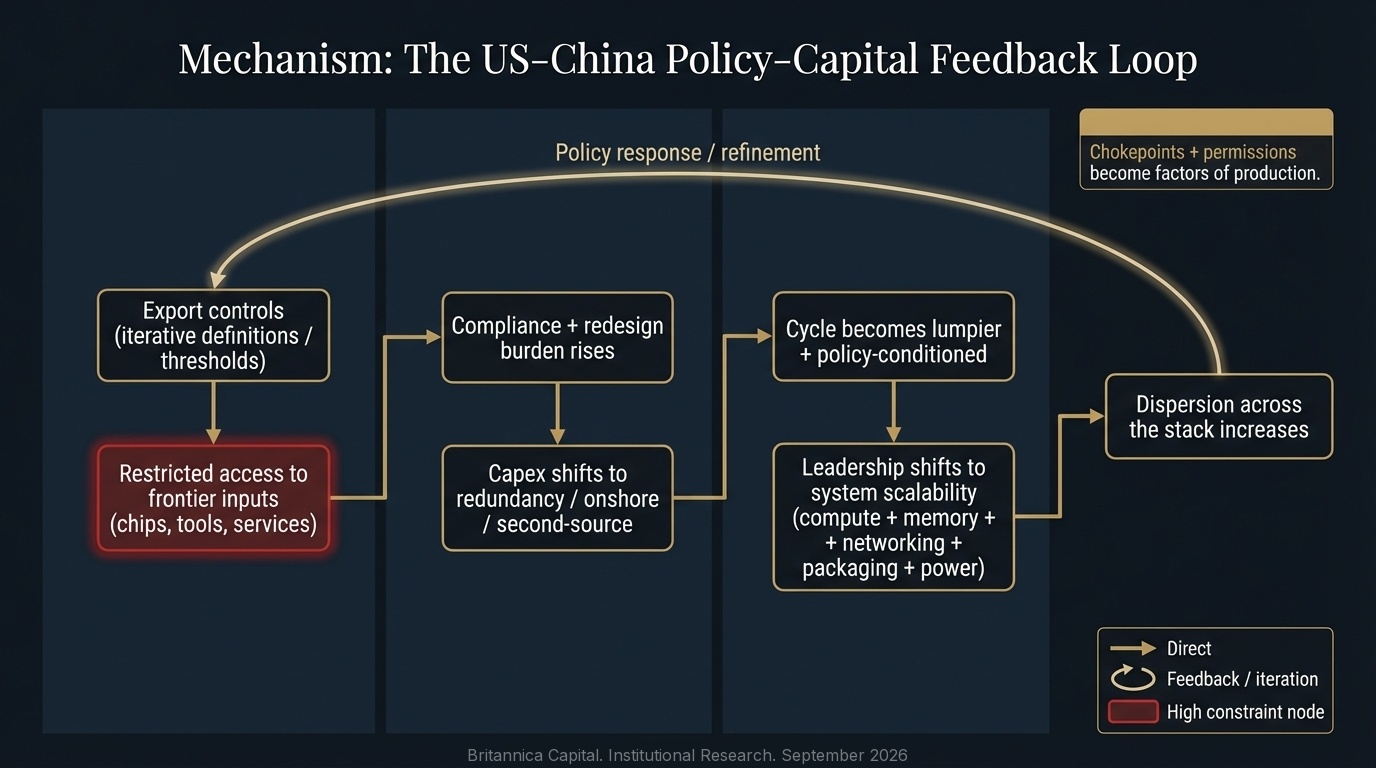
When leading-edge capabilities concentrate in a handful of locations, governments and corporations alike pay for resilience: second-source suppliers, diversified packaging, onshore capacity. The January 2026 US-Taiwan arrangement—investment commitments by Taiwanese chipmakers in exchange for tariff-free import allowances tied to new US capacity—is the clearest recent example. The economic cost is real. Redundancy capital becomes rational—even when inefficient. Resilience capital raises costs and duplicates capacity, even when near-term demand does not strictly require it.